Check Whether Your 40cm+ Tree May Fit London’s Grant
Estimate DBH, understand the remaining eligibility checks, and learn the correct sequence for London’s up-to-$1,000-per-tree preservation program.
First-come, first-served while City funds remain. The City does not publish a live budget percentage.
No obligation. Takes about 30 seconds to start.
See how the rebate check works
If you have a mature tree that needs care, this quick walkthrough shows what the City supports, who can apply, and what happens after you check your address.
- Find out what work may be covered
- Understand the process before you pay anything
- Move into the rebate details only if it looks promising
Tools & Dashboards
Fast, high-intent tools that help homeowners understand risk, canopy health, and grant timing at a glance.
Canopy Dashboard
Compare London’s approximately 27% current canopy with the City’s 34% target for 2065.
Open DashboardRisk Calculator
Explore an illustrative maintenance-versus-removal scenario, then replace assumptions with written local quotes.
Compare CostsOak Wilt Timer
See whether London’s November-to-March TCCP work window for oak trees is currently open.
Check Oak TimingGrant Guide
Learn how the reimbursement model works, including the $5,000 property maximum and case-by-case awards.
Read the GuideTree Canopy Conservation Funding
For approved work, London’s TCCP offers up to $1,000 per eligible tree, to a maximum of $5,000 per property.
The program supports preservation work on qualifying privately owned trees. The City notes that most awards are less than the maximum.
Important Requirement
Apply and wait for a City decision before work begins. After approved work is complete, submit proof of payment; a follow-up inspection may occur before reimbursement is issued.
Make a Better Tree-Care Decision
Separate grant rules, tree-protection rules and arborist recommendations before authorizing work.
By-Law Confusion
The 40cm TCCP size threshold and the 50cm Distinctive Tree definition serve different purposes. A Tree Protection Area can also protect trees of any size.
Qualification Checks
The City recognizes four qualification routes. Confirm the individual’s current credential, insurance and quote details before you apply or hire.
Property Context
Heritage status, construction, natural features and the tree’s location can change the approvals you need. Our neighbourhood guides point you to the relevant City checks.
Qualified. Verifiable. Properly Documented.
Use the City’s published criteria to verify the professional and review the quote before submitting an application.
Four Accepted Routes
Ontario-qualified arborist, ISA Certified Arborist, ASCA Registered Consulting Arborist or Registered Professional Forester.
Verify Before Hiring
Ask for the named professional’s current credential, insurance details and the company information that will appear on the quote.
Review-Ready Quotes
The City requires arborist information, services and materials, the recipient, cost and date. Clear technical detail is helpful but not a guaranteed approval formula.
Regulatory Guide: 40cm vs 50cm
Understanding the difference between maintenance grants and removal permits.
40cm Diameter Tree
A privately owned tree at least 40cm DBH can pass the program’s initial size test.
- May be considered for eligible preservation work
- Size alone does not guarantee approval
- Other by-law or planning rules can still apply

50cm "Distinctive Tree"
A private tree at least 50cm DBH within the Urban Growth Boundary may be a Distinctive Tree, subject to the by-law’s scope and exceptions.
- Check before injuring or destroying the tree
- Trees in Tree Protection Areas are protected at any size
- Grant approval does not replace a required permit
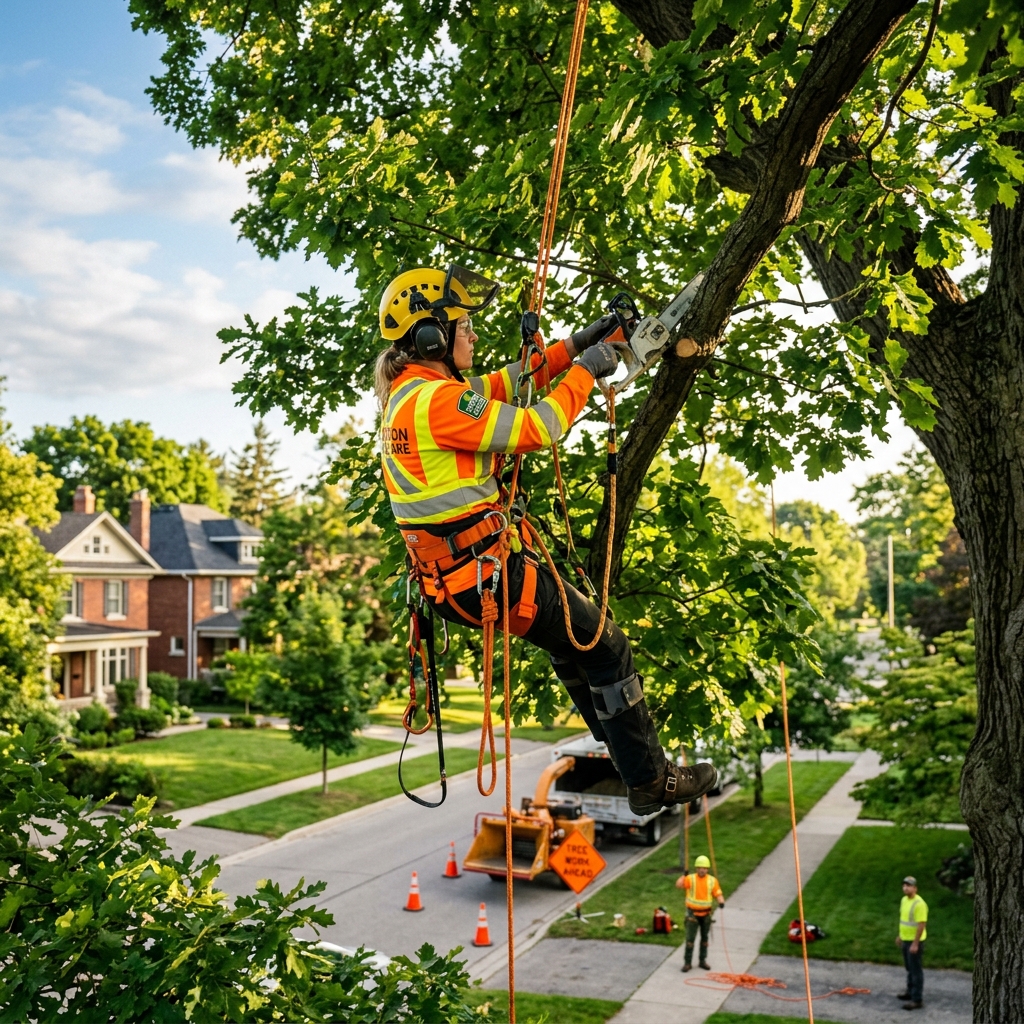
How the Municipal Reimbursement Works
Funding is conditional: the City reviews the application, determines the award and verifies completion.
Step 1: Obtain a Current Quote
Use a qualified arborist and make sure the quote identifies the professional, services and materials, recipient, cost and date. Application documents must be no more than six months old.
Step 2: Apply and Wait for Review
Submit the application before work starts. City staff review it and may visit the site. If approved, the Offer of Award sets out the eligible work and amount.
Step 3: Complete, Pay and Verify
Complete only the approved work, pay the contractor and submit proof of payment. The City may conduct a follow-up inspection before issuing a cheque.
Start with the Published Eligibility Tests
The City says a London resident or property owner can apply and does not have to live at the property. Every application still receives program review.
- London resident or property owner
- Private tree at least 40cm DBH
- Eligible preservation work by a qualified arborist
- City approval before work begins
Don’t Leave the Rebate Unchecked
Because the intake window is active, the safest next step is to verify whether your property looks like a fit before you spend money on a quote.
Start with the address check, then move into the rebate details if the tree appears to meet the size threshold.
Homeowner FAQ
Everything you need to know about the 2026 Tree Canopy Conservation Program (TCCP).
Do I need a permit to prune or remove a Silver Maple in London?
Species alone does not decide this. A private tree at least 50cm DBH within the Urban Growth Boundary may be a Distinctive Tree, while trees in a Tree Protection Area are protected at any size. Check the by-law’s scope and exemptions before injury or removal. At 40cm DBH, the tree may meet the TCCP size threshold for preservation work, but funding is not automatic.
How much does the City of London pay for tree pruning?
The maximum is $1,000 per approved tree and $5,000 per property. The City says most awards are less than $1,000. Apply before work starts; after approved work is complete, pay the contractor, submit proof of payment and allow for a possible follow-up inspection before reimbursement.
What exactly is considered a "Distinctive Tree" in London, Ontario?
Under London’s Tree Protection By-law, a Distinctive Tree is a privately owned tree at least 50cm DBH within the Urban Growth Boundary, excluding a Tree Protection Area. Trees inside a Tree Protection Area are protected regardless of size. The separate TCCP preservation program starts its size screening at 40cm DBH.
How do I measure DBH for a tree permit or the conservation grant?
DBH means diameter measured at 1.4 metres above ground. Measure circumference at that height and divide by π (about 3.1416). A result of 40cm or more meets the program’s size threshold; the tree, work, applicant and arborist still need to satisfy the rest of the City’s review.
Are Oak trees eligible for the London tree grant?
Oak trees can be considered, but London states that TCCP work on oaks is deferred to November through March because of oak-wilt risk. That program timing is not the same as saying all warm-season pruning is universally illegal, and the City does not publish a higher oak-specific award.
How do I find a "qualified arborist" in London, Ontario?
The City recognizes an Ontario-qualified arborist, an ISA Certified Arborist, an ASCA Registered Consulting Arborist or a Registered Professional Forester. It says a utility arborist may not be considered qualified for the program, so verify whether the individual also holds an accepted credential.
Does the London tree rebate cover cabling and bracing?
Cables, braces and props are listed as eligible work when recommended by a qualified arborist and approved by the City. A support system can reduce a specific risk, but it does not guarantee that a tree or branch will not fail; it also needs future inspection.
What is the fine for cutting down a tree in London, Ontario?
London’s administrative monetary penalty schedule lists $750 for injuring and $1,000 for destroying a protected tree. Court penalties can be higher. Whether a permit or exemption applies depends on the tree, location and proposed work, so confirm status with the City first.
Can landlords and real estate investors apply?
The City says a property owner does not have to live at the property to apply. A landlord or other non-resident owner can therefore apply, but the tree, work, professional, timing and documents remain subject to City review.
How long does the London tree grant process take?
The sequence is: obtain a current qualified-arborist quote, apply before work, allow for City review and a site visit, wait for an Offer of Award, complete and pay for the approved work, submit proof of payment, and allow for a follow-up check. The City currently warns that strong interest is causing longer review times and does not promise a fixed turnaround.